








Hope you enjoy reading this blog post.
If you want the Moris Media Team to help you get more traffic, just book a call.
Wednesday, 24 June 2026

Written by :
Mehak Veru
PR & Business Executive
May 27th, 2023
 950
950
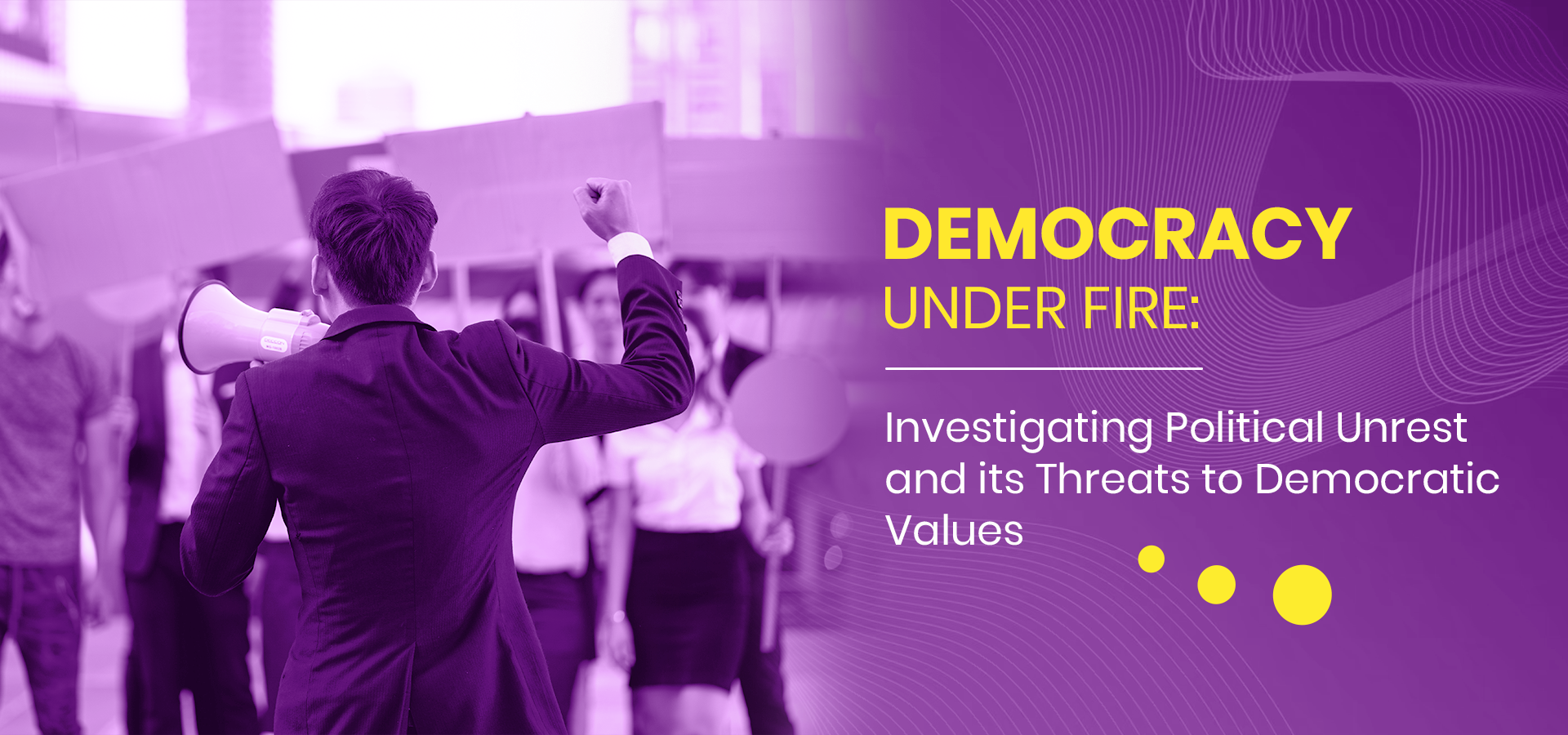
The threat to democratic institutions has increased as political turmoil has risen in recent years. Political unrest frequently lasts for a long time. The world is dealing with serious problems, such as rallies and upheavals as well as the deterioration of democratic principles. Moris Media, a top digital marketing company in India, is to investigate the reasons behind political unrest, analyzes how it affects democratic systems, and highlights the dangers that democratic institutions face around the globe.
There are several potential causes of political instability, each with its own special set of conditions. The main causes of public discontent are socioeconomic disparity, corruption, a lack of political representation, and poor governance. There is persistent proof of extreme horizontal inequality between groups that are at odds Group disparities in political access are a common occurrence, which explains why violence is used instead of political discussion to settle disputes. People sometimes turn to protesting and holding demonstrations as a way of airing their frustrations when they feel marginalized and excluded from the political process. Additionally, social media and the quick transmission of information have given people the ability to express their concerns, amplifying dissent and inspiring broader movements.
Democratic institutions are significantly challenged by political upheaval. Political stability has not exactly been the rule throughout human history. Like all political systems, democracies are prone to collapse. Regardless of political administration, if a nation does not have to worry about wars or abrupt changes in power, its citizens may focus on working, saving, and investing. Numerous factors have been shown in the most current empirical research on corruption to strongly correlate with corruption. A lengthy history of democracy and political stability are among the elements that have been proven to lower corruption. Furthermore, protracted unrest can worsen social differences, polarisation, and the rule of law, which further undermines the basis of democracy.
When there is political turmoil, certain leaders may take advantage of the crisis to solidify their hold on power, frequently using authoritarian methods. If parties represent constituents of the government, then the expression of society's interests or their repression through the party system will have a significant impact on the quality of democracy. Populist politicians may take advantage of popular annoyance and discontent by making easy fixes and making marginalized people the scapegoats for their problems. Democratic institutions and principles are directly threatened by the growth of populism and authoritarianism.
Governments may take oppressive actions in response to political turmoil, restricting civil freedoms and stifling dissent. Civil liberties are being lost around the world as a result of deliberate neglect and deliberate design. The resultant disparity in opportunities, declining civil freedoms, and growing racial and religious prejudice are unfortunate consequences of the present administration's policies. But under the guise of preserving stability, these rights can be restricted, thus undermining democratic values.
Political unrest can be exacerbated by the spread of disinformation and the manipulation of public opinion. Social media platforms have become breeding grounds for false narratives and divisive content, deepening societal divisions.
Political instability frequently highlights the fundamental flaws in democratic systems. According to the concept of a poverty trap, impoverished nations nearly usually have weak or subpar institutions. For instance, they have a lot of corruption, difficulty enforcing formal regulations (which persists in some countries even today), a lack of the rule of law, and a lack of private property rights. In academic parlance, we refer to these as mutually reinforcing factors. Institutions that are inept or corrupt fail to address the underlying issues that lead to unhappiness and offer remedies. As a result, public faith in democratic institutions continues to decline.
To safeguard democratic institutions in the face of political unrest, proactive measures are necessary:
It is crucial to educate people about democratic principles, critical thinking, and media literacy. As a result of a failing economic strategy, media organizations are closing their doors. Numerous reporters have been slain or imprisoned just for performing their professions in the past year alone. Societies may withstand misinformation and polarisation better by encouraging an educated and discerning populace.
The backing of democratic institutions comes in large part from the international community. In defense of the liberal international order, international cooperation among Western and a few other democracies has rekindled. Collaboration between nations, international organizations, and civil society may encourage democratic transitions, help spread democratic principles, and help in times of turmoil.
Global democratic institutions are significantly threatened by political upheaval. Every contemporary democracy is organized by political parties, and some observers contend that parties are what makes democracies responsive. Others, however, contend that parties give radicals a platform and make governments less receptive to the needs of the populace. As newly established democracies throughout the world grapple with concerns of representation and governability, the discussion of parties and democracy assumes fresh prominence. Societies may prevent challenges to democratic institutions by understanding the origins and effects of political instability. We can protect the democratic ideals that make up the Constitution by working together.
Liked reading this blog? Spread the word!



The Power of Team Calendar: Boosting Efficiency and Collaboration with moCal
Read More
Mastering Business Time Management with moCal's Online Calendar For Business
Read More
Unlocking Seamless Collaboration with moCal's Online Shared Calendar
Read More
Unlocking the Power of 7-in-1 moCal: Redefining Efficiency in Modern Business
Read More
Elevating Personal Branding: The Moris Digital Doctors Prescription
Read More


If you want the Moris Media Team to help you get more traffic, just book a call.




We hate spam as much as you do