











Hope you enjoy reading this blog post.
If you want the Moris Media Team to help you get more traffic, just book a call.
Sunday, 25 October 2026

Written by :
Mehak Veru
PR & Business Executive
July 11th, 2023
 1116
1116
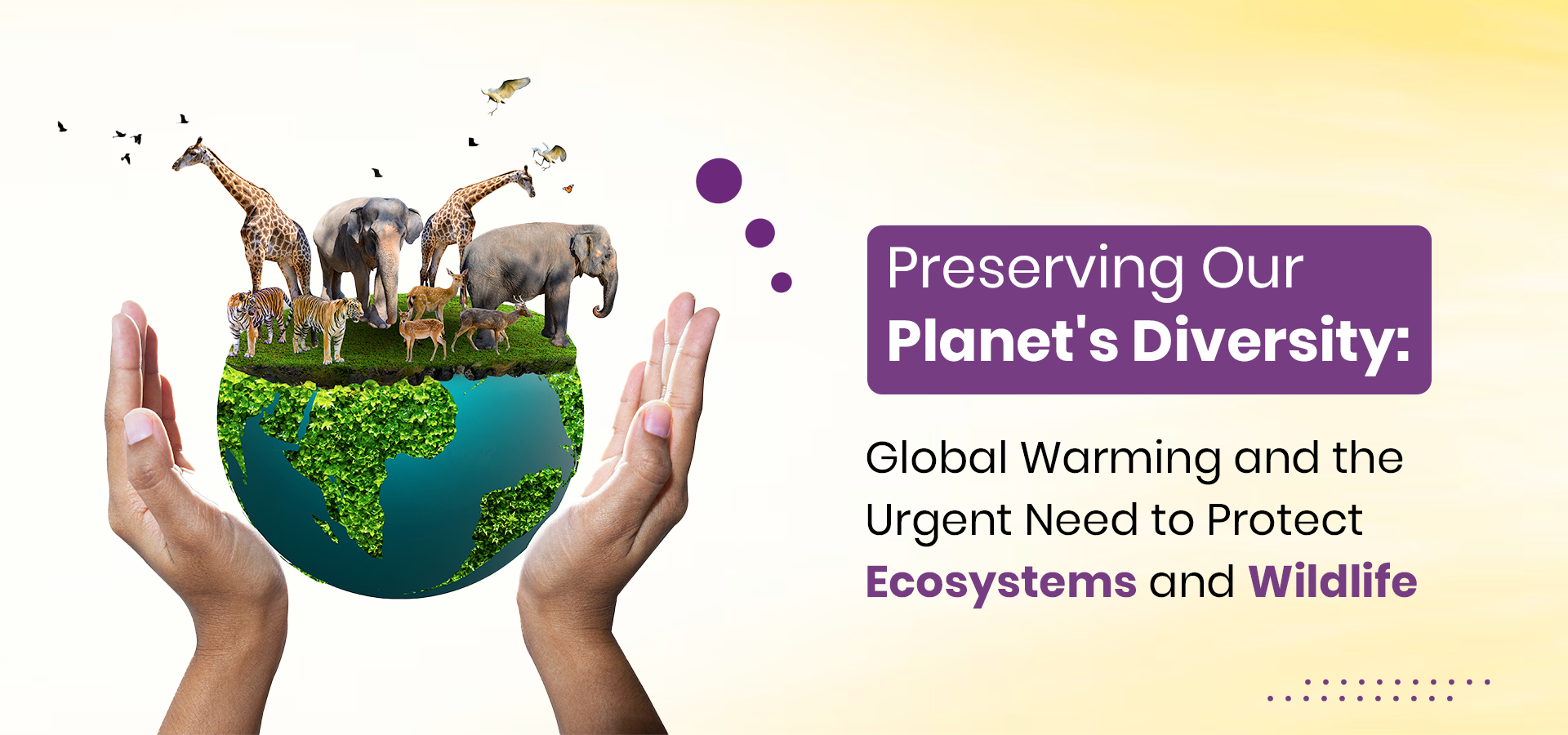
The primary cause of the worrisome rate of climate change on Earth is human activity. The variety of life on Earth, in all its manifestations, from genes and microbes to complete ecosystems like forests or coral reefs, is known as biological diversity, also known as biodiversity. After 4.5 billion years of evolution, which was increasingly affected by humans, we now have the variety we witness. One of the most detrimental effects consequence of global warming is threats to biodiversity, particularly to ecosystems and species. The observed ecosystem-level alterations in response to climate change are the result of interactions between species- and population-level responses as well as direct impacts from shifting climatic factors. Here, we concentrate on several crucial ecosystem-level traits and features that are impacted by climate change, including primary production, species interactions, emergent traits like biological invasions, and the effect of severe events on ecosystem resilience.
The variety of life on Earth, including the many varieties of plants, animals, and microbes, is known as biodiversity. It serves as the basis for healthy ecosystems and offers crucial functions including pollination, nutrient cycling, and water filtration. Many animals find it harder and harder to adapt to their habitats and live as temperatures rise. Some animal and plant species may lose their habitat and go extinct when land is used for agriculture. But the loss of biodiversity is mostly attributed to climate change. Ecosystems in the oceans, on land, and in freshwater have all been affected by climate change. The earliest extinctions due to climate change were brought on by the loss of local species, a rise in illnesses, and the mass death of plants and animals.
Additionally, the sensitive timing of natural phenomena, such as migration and reproduction cycles, is disturbed by global warming. Many species base their decisions on whether to migrate, reproduce, or hibernate on specific temperature patterns and seasonal signals. On land, hotter temperatures have compelled many animals and plants to migrate to poleward latitudes or higher heights, with far-reaching effects on ecosystems. Every degree of global warming raises the likelihood of species extinction. These crucial life events are going out of sync due to changing climatic patterns, which hurts reproductive success and population growth. For instance, migrating birds may reach their nesting areas before the availability of food supplies, which might reduce breeding success and population increase.
Increased frequency and intensity of extreme weather events are another significant impact of global warming. The threat to biodiversity is not merely posed by the temperature increases brought on by global warming. Ice and snow are melting due to the growing climate problem, which is also boosting sea levels and destroying essential coastal habitats. One way that organisms adapt to environmental changes is by changing their morphology or behavior. Temperature variations can cause behavioral reactions to climate change that appear before changes at the population and species level, such as distribution shifts or population decrease. Hurricanes, one of the most frequent extreme weather phenomena, may cause devastating floods that risk both human and animal life while destroying homes and vegetation. Additionally, wildfires are becoming more severe.
Coordinated efforts are needed at the local, national, and international levels to address the threat that global warming poses to biodiversity. Institutional impediments include a focus on short-term planning, rigid regulations and procedures, jurisdictional limitations, and long-standing practice of managing based on past conditions continue to be a struggle despite advancements. Implementing climate adaptation measures can be challenging even with agency-level orders because of a lack of resources and time, mistrust from the public, and challenges in communicating scientific knowledge between researchers and managers. Switching to renewable energy sources, promoting energy efficiency, and implementing sustainable land-use practices are all significant climate change activities.
In the end, protecting ecosystems and species from the dangers of global warming necessitates a team effort. Important human services are supported by ecosystems and biodiversity, therefore these changes have an influence on supplying, regulating, sustaining, and cultural services and have consequences for human well-being. We all must protect the splendor and variety of our world for future generations. Flexible, proactive strategies that take into consideration anticipated climate change implications will be necessary for effective management. Managers are starting to put these techniques into practice, but they are having trouble because of institutional hurdles and a lack of knowledge. Although widespread integration of climate change into natural resource management is still a work in progress, instances are beginning to emerge that raise awareness and offer case studies in several industries. By taking strong action right once, we can protect biodiversity, restore ecosystems, and ensure that all species on Earth have a sustainable and thriving future.
Liked reading this blog? Spread the word!




The Power of Team Calendar: Boosting Efficiency and Collaboration with moCal
Read More
Mastering Business Time Management with moCal's Online Calendar For Business
Read More
Unlocking Seamless Collaboration with moCal's Online Shared Calendar
Read More
Unlocking the Power of 7-in-1 moCal: Redefining Efficiency in Modern Business
Read More
Elevating Personal Branding: The Moris Digital Doctors Prescription
Read More


If you want the Moris Media Team to help you get more traffic, just book a call.




We hate spam as much as you do