











Hope you enjoy reading this blog post.
If you want the Moris Media Team to help you get more traffic, just book a call.
Thursday, 25 June 2026

Written by :
Mehak Veru
PR & Business Executive
August 23rd, 2023
 1052
1052
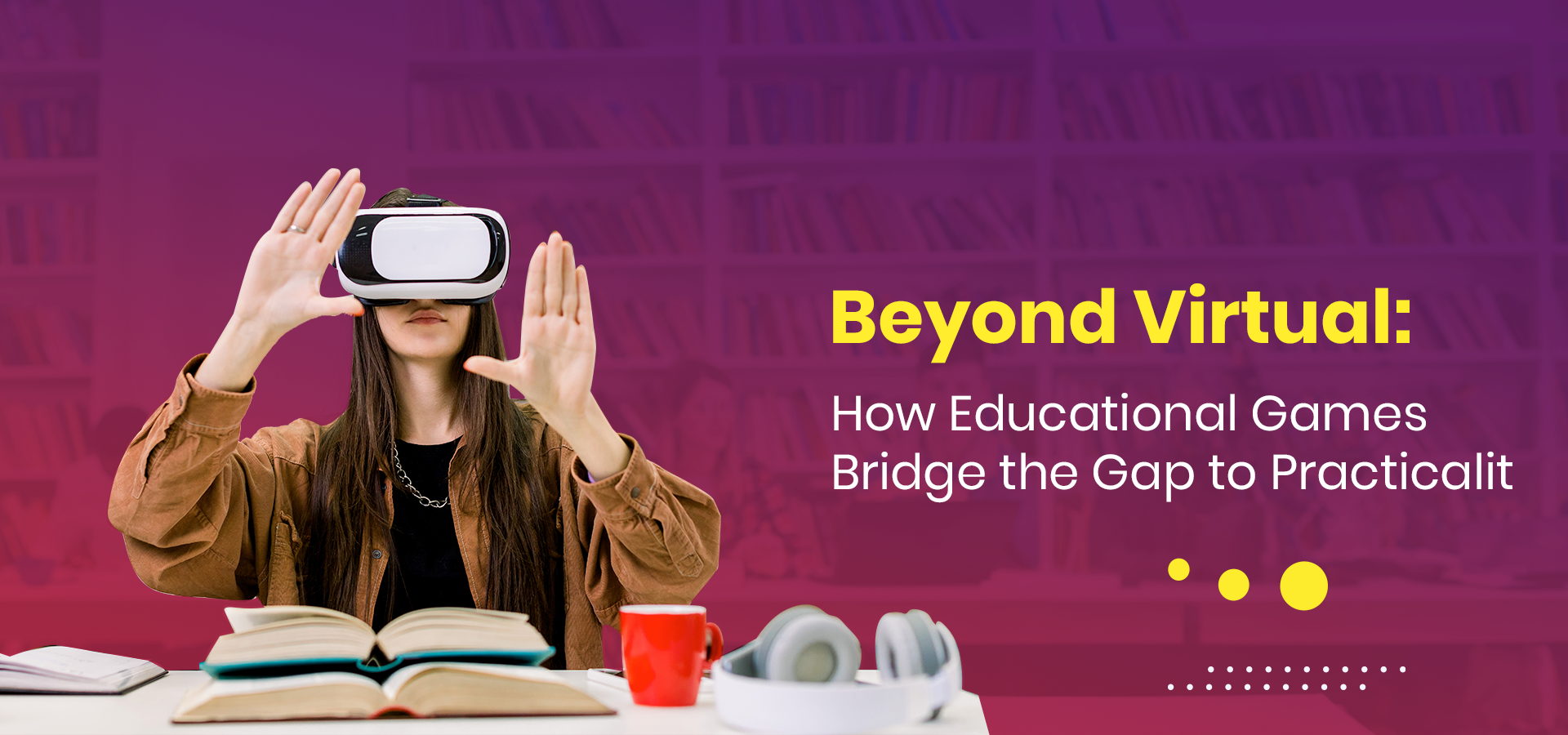
In a time when technology is permeating every aspect of our lives, the educational environment has undergone a huge change as well. Traditional teaching and learning strategies have changed as a result of the prominence given to digital tools and platforms. The stereotype is no longer necessary since technology, especially the tools and applications used in education, is not only developing but also taking on new forms. The experiences that education technology can provide go beyond just interacting with screens. From artificial intelligence to mixed reality, it is now taking on a role in the classroom that is not only larger but also more diversified. Moris Media,Indias Leading Digital Marketing Agency explores how these engaging interactions not only hold our interest but also offer a plethora of real-world applications that extend beyond the confines of the screen.
For learners of all ages, educational games, sometimes known as "edutainment," mix entertainment and learning to produce engaging experiences. These games use the intrinsic allure of interactive media to instruct in a range of areas, from language arts and history to maths and science. A type of artificial intelligence that understands you well enough to advise what to purchase next may also understand the requirements of the students well enough to personalize and modify the learning material to their speed and level of comprehension, as well as to detect their deficiencies and suggest new and improved ways to address them. Additionally, pupils may have access to AI outside of a teacher's regular working hours and at any time, any place. Their success stems from their capacity to turn seemingly uninteresting ideas into stimulating challenges that enthrall players and promote community.
The potential of educational games to promote experiential learning is one of its main benefits. These games engage learners in real-world situations where they must use their knowledge to resolve issues and make decisions, as opposed to depending exclusively on theoretical explanations. In recent years, FGamification has gained popularity in the classroom. Its benefits include offering kids the chance to study in a multisensory, dynamic, and exploratory setting, among others. In particular, students may utilize these educational games for hands-on learning to hone their problem-solving and decision-making abilities in a dynamic learning environment. Additionally, as opposed to obtaining a delayed response from conventional evaluation techniques, students can receive feedback or findings right away to acquire solutions. With this hands-on method, students move from being passive consumers of knowledge to being active participants.
By encouraging the growth of crucial soft skills, educational games go beyond just imparting subject-specific knowledge. Teamwork, cooperation, and communication frequently become essential to advancing in some games. Digital games may be utilized effectively in the classroom, especially if they are connected to practice. The ability to enable situated learning through context awareness, as in the case of ubiquitous games, or to boost user engagement through immersive gaming experiences has been demonstrated by digital games that give technology-mediated encounters between the physical and the digital. This reflects circumstances in the real world when successful collaboration is essential, whether at business or in interpersonal interactions.
Educational games are particularly adept at adopting gamification, the incorporation of game features into non-game environments. The majority of instructional games are played in class on desktops, but not many are played on smartphones and tablets. Due to this, their use outside of the traditional classroom may be restricted. Students might not be able to fully profit from these games as a consequence. It is important to keep in mind that learning and studying may occur outside of the classroom, thus having access to these portable tools may be beneficial for the students. In our rapidly changing modern environment where people are constantly on the go, it is thought that an educational game that allows students to "play" and learn conveniently and efficiently may be more advantageous for pupils. These games encourage students to actively participate and perform well by including components like prizes, awards, and progress monitoring. This strategy takes use of our innate need for success and acknowledgment, generating a positive feedback cycle that keeps students interested in and motivated in their education.
Diverse learning styles and pacing are sometimes difficult to accommodate in traditional schooling. However, educational games provide a more individualized and adaptive approach. Depending on a player's success, they may change the difficulty level to keep learners continually challenged without overwhelming them. Since many kids and teenagers prefer playing computer and video games to participating in outdoor sports or other physical activities, educators are interested in fusing educational content with educational games to increase students' intrinsic motivation for learning and make sure that players feel challenged and have a sense of mystery and control while playing; Make sure the game's difficulty level is balanced so that it's neither too simple nor too challenging, as either might demotivate players. With this flexibility, a larger spectrum of students may be catered to, from those who pick up concepts fast to others who need more time and practice.
Educational games have developed past the level of simple pleasure to become effective teaching and learning resources. Immersion in interactive events helps students learn experientially, develop crucial soft skills, and close the gap between theoretical understanding and practical application. According to Cameron-Jarvis, the key to employing games in the classroom is to avoid gamifying everything and to start modest by using games with clear rules. The diversity of games is important, thus teachers should strive for it. If you do allow students to play games in class, consider the feelings that games may arouse in addition to the strategy and technique. The educational environment is ready for a revolutionary voyage beyond the screen as long as instructors and students continue to use these cutting-edge technologies.
Liked reading this blog? Spread the word!




The Power of Team Calendar: Boosting Efficiency and Collaboration with moCal
Read More
Mastering Business Time Management with moCal's Online Calendar For Business
Read More
Unlocking Seamless Collaboration with moCal's Online Shared Calendar
Read More
Unlocking the Power of 7-in-1 moCal: Redefining Efficiency in Modern Business
Read More
Elevating Personal Branding: The Moris Digital Doctors Prescription
Read More


If you want the Moris Media Team to help you get more traffic, just book a call.




We hate spam as much as you do