










Hope you enjoy reading this blog post.
If you want the Moris Media Team to help you get more traffic, just book a call.
Wednesday, 24 June 2026

Written by :
Mehak Veru
PR & Business Executive
August 23rd, 2023
 1057
1057
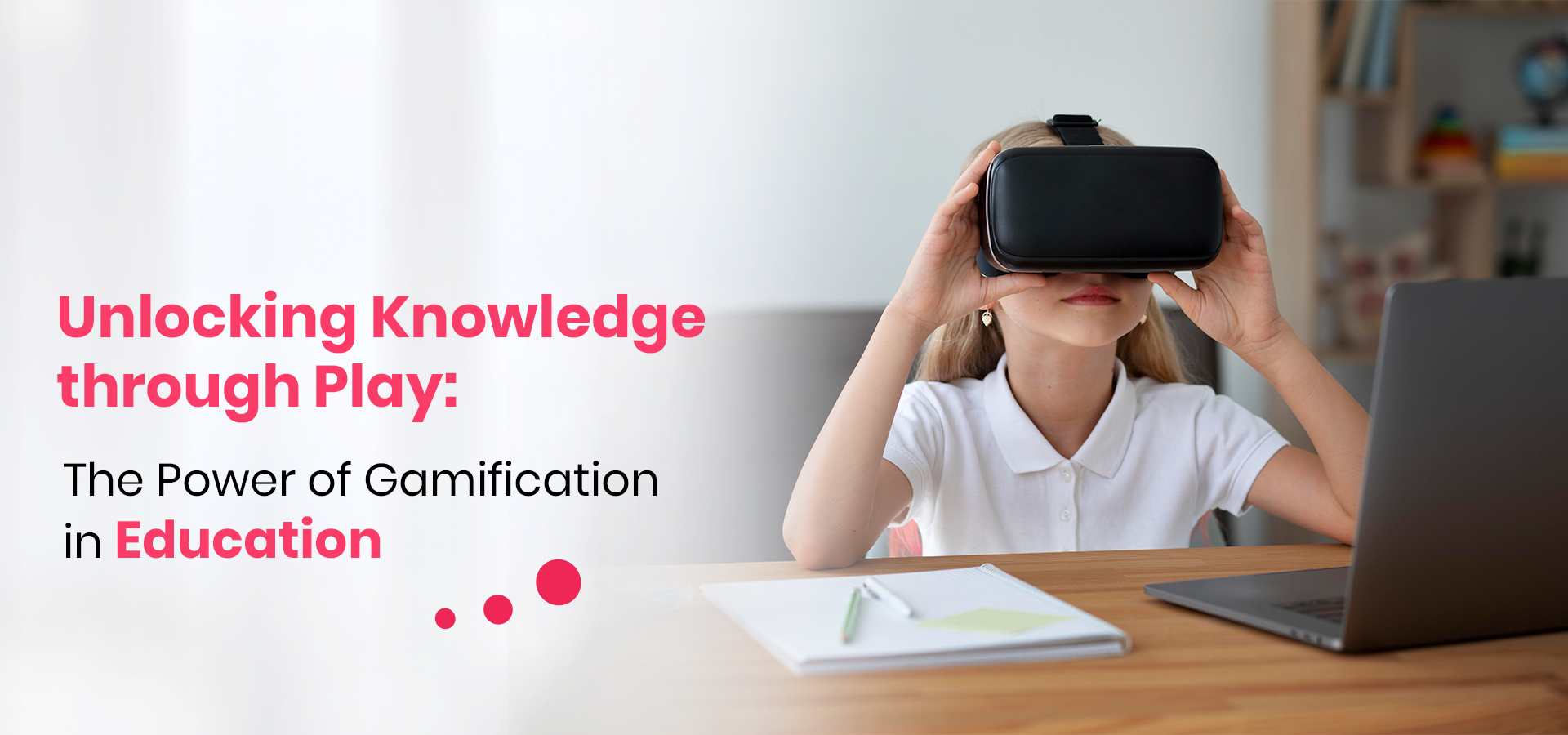
Gamification has been popular in education recently as a dynamic strategy to engage students and improve the learning environment. In our modern culture, technology naturally influences curriculum development and learning. Gamification has the power to revolutionize education and make learning an engaging process by changing conventional learning techniques into interactive and immersive experiences. The leading digital marketing company in India, Moris Media, investigates the problem of gamification in education and its implications on student engagement and performance.
Gamification in education entails more than merely adding game elements to textbooks. Students' ability to retain information and develop critical thinking skills may be increased via the use of gamification, which makes learning engaging and interactive. The second of the aforementioned forms of gamification is typically what educators mean when they discuss it. Gamification in education refers to the use of game design principles in a learning environment by educators. Usually, the aim is to increase learner engagement. There is a wide range of features that games may contain, with various players being drawn to different characteristics. However, breaking down the notion of a "game" into constituent game design elements is challenging given how great the distinctions are among, for instance, chess. This tactic makes use of people's natural drive for rivalry, achievement, and rewards.
Games have a natural power to draw players in, hold their interest, and inspire them to overcome obstacles. It is impossible to ignore the crucial benefit of gamification in education, which is increased engagement. Students become more focused and involved in their academics when game design aspects are included in the classroom. The gratification gained from beating game stages helps to acquire this higher degree of involvement. Students become active participants in their learning process when these game dynamics are included in instructional activities, which increases concentration, curiosity, and tenacity.
The gamification of learning helps students develop growth mindsets. A growth mindset encourages the concept that abilities and intelligence may be improved through work, practice, and education. When teachers include elements like those mentioned in a lecture, even if the end output isn't strictly a game, it has been gamified. However, educators must also be cognizant of less structured aspects, such as setting up a lecture room or assigning pupils strange chores. Some elements, such as badges and grading, are often employed. Children who wouldn't want to leave their learning environment come to mind the realistic objective is provided through gamification, and the challenges incorporated into the game design make it simpler to comprehend and internalize new ideas.
Gamified education makes use of this characteristic to encourage student cooperation as many games thrive on collaboration and social interaction. The capacity to improve knowledge and information retention is one of gamification's primary educational benefits. Students are more likely to recall and comprehend knowledge learned through gamification than through conventional lectures or textbooks since learning through gamification is practical and participatory. Additionally, studies have demonstrated that gamified learning increases student retention, particularly for difficult concepts and disciplines. This collaborative setting fosters critical interpersonal skills while also improving the learning process.
Finding the ideal ratio of challenges to rewards is essential to gamification. To engage pupils and foster critical thinking, the difficulties that are provided must be interesting enough, and the rewards that are given must have lasting value. The standard educational system is considerably improved by gamification, which offers a different, more effective, and pleasant method of learning. Work that is too easy can make you bored, while a task that is too hard might make you angry. An ideal learning environment must be maintained by striking this balance.
By making learning more fun and participatory, gamification can completely alter the way that education is seen. We have learned how gamification may transform learning experiences in this fascinating exploration of gamification in education. Students can be motivated, engaged, and given relevant learning environments thanks to gamification. The opportunities for incorporating gamified aspects into educational environments will expand as technology develops. By incorporating game features that make learning more interactive and interesting, gamification is revolutionizing education. The key to how gamification improves learning is being revealed by educators by combining game features like points, medals, and leaderboards.
Liked reading this blog? Spread the word!




The Power of Team Calendar: Boosting Efficiency and Collaboration with moCal
Read More
Mastering Business Time Management with moCal's Online Calendar For Business
Read More
Unlocking Seamless Collaboration with moCal's Online Shared Calendar
Read More
Unlocking the Power of 7-in-1 moCal: Redefining Efficiency in Modern Business
Read More
Elevating Personal Branding: The Moris Digital Doctors Prescription
Read More


If you want the Moris Media Team to help you get more traffic, just book a call.




We hate spam as much as you do