











Hope you enjoy reading this blog post.
If you want the Moris Media Team to help you get more traffic, just book a call.
Saturday, 27 June 2026

Written by :
Mehak Veru
PR & Business Executive
June 27th, 2023
 1027
1027
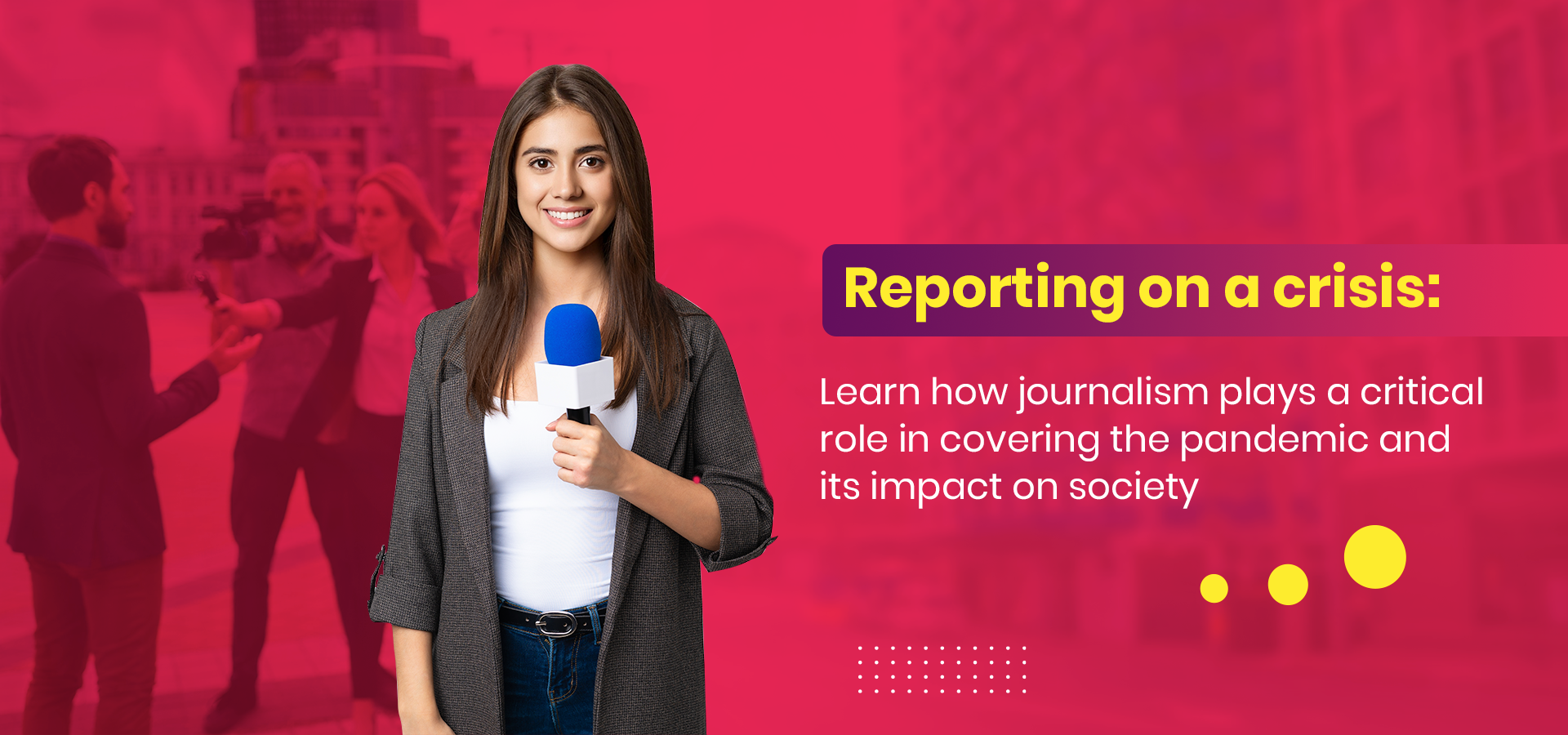
The COVID-19 epidemic has not only created significant problems for communities throughout the world, but it has also attracted attention to the vital function that journalism plays in gathering and spreading news during a crisis. Newsrooms around the nation have prioritized pandemic coverage to enlighten the people during these unsettling times. However, the constantly shifting and even unconfirmed nature of COVID-19 data has made it difficult for journalists and researchers to present the correct information to the public. Journalists have been crucial in delivering timely and accurate news, dispelling myths, holding governments responsible, and giving a forum for experts and those who have been impacted to speak out. It is difficult for journalists to acquire and disseminate reliable information in the middle of the COVID-19 outbreak. Journalists are a member of an ecosystem in which the environment they operate in both influences and is impacted by them. This study investigates how the discursive construction of journalism changed during the COVID-19 crisis using the framework of disaster communication ecology. The largest digital marketing company in India, Moris Media, examines the duties and the role of journalists in reporting the epidemic.
It's essential to have quick access to reliable information during a crisis like the epidemic. When it comes to acquiring, confirming, and publishing information on COVID-19, journalists have been at the forefront. The undersigned groups salute those who work persistently to keep the public informed and appeal for strong support for independent journalism at a time when the job of journalists and the media was more important than ever in the backdrop of the worldwide disaster brought on by the COVID-19 epidemic. To handle the greatest common problem of our generation, millions of people throughout the world were seeking trustworthy, factual, and gender-sensitive news. Never before has there been such a pressing demand for reliable information as there is now. It is essential to have timely access to reliable information during a public health emergency since it is one of the fundamental building blocks needed to contain the virus's transmission, lessen its effects, and support society's reactions. The only way to combat the false information that is spreading the epidemic is through journalism. Journalists have aided people in making informed judgments and taking the required safeguards to protect their health by assuring the quality and dependability of the information.
Misinformation and disinformation have increased throughout the epidemic and have been spreading quickly through social media and other avenues. Journalists have been crucial in disproving exaggerated claims and conspiratorial notions. By weakening trust, escalating concerns, and even encouraging violent activity, disinformation is influencing how nations are responding to the worldwide epidemic. An uptick in misinformation is weakening official responses to the Covid-19 outbreak and endangering the health of the populace at a time when citizen trust and compliance with measures such as lockdowns and cleanliness recommendations is of the highest significance. Users who are concerned about the abundance of contradicting information are spreading unproven medical treatments, preventative measures, and other information over the Internet. They have assisted in limiting the negative impacts of false information by ensuring that accurate information reaches the general public through fact-checking, investigative reporting, and data analysis.
As a watchdog, journalism holds governments and public leaders responsible for their deeds, policies, and choices. Particularly when it comes to making government officials and organizations accountable for their deeds and decisions, the media is crucial in fostering accountability. A free and independent press is crucial to ensuring that the public is informed and equipped to hold those in authority responsible in a democratic society. Journalists have raised concerns during the epidemic, investigated government actions, and uncovered flaws or mistakes in handling the situation. By closely monitoring governmental acts and revealing instances of wrongdoing, corruption, and power abuse, journalists operate as watchdogs and whistleblowers. The media contributes to maintaining public officials' integrity, openness, and accountability to their citizens by bringing these concerns to light. Journalism has influenced public discourse and promoted informed public discussion by offering openness and accountability.
To convey important information to the public, journalists have served as a channel for scientific experts, public health authorities, and frontline workers. Journalists have magnified the voices of experts through interviews, analysis, and feature pieces, aiding in the decipherment of difficult scientific and medical concepts. One of the most important strategies for managing and resolving a crisis is the media's cooperation with governmental authorities. Despite the negative coverage that some government actions have received in the news, this partnership should continue to grow. The media's independence should not in any manner be compromised by the government and media working together. Journalism has been essential in reducing misunderstanding and advancing evidence-based decision-making by making expert information intelligible and accessible. While governments and health authorities dealt with the challenging issue of regulating the transmission of their choices, the news industry and its experts adjusted their practices to match the demands of reporting on a pandemic with unknown repercussions. To comprehend and respond to the coronavirus epidemic's several waves, residents have sought information from a variety of sources.
The COVID-19 epidemic has highlighted the critical function of journalism in times of world catastrophe. Journalists have played a crucial role in dispelling myths, disseminating factual information, holding governments responsible, magnifying the opinions of experts, and giving voice to those who have been adversely impacted. Even if COVID-19 may not have caused the global news media extinction catastrophe anticipated, the persistent coronavirus waves over the previous two years have severely harmed journalism worldwide. They have shaped public perception, influenced policy actions, and promote resilience in the face of the epidemic thanks to their devotion to ethical reporting and serving the public interest. The pandemic's protracted duration and unpredictability have brought several special obstacles for many journalists on both a personal and professional level. Newsrooms were overcrowded, journalists grew physically and emotionally weary, several of them died from the illness, and many states exploited COVID-19 to impose restrictions on free speech in the media. Journalism's ability to deliver accurate, honest, and trustworthy information is still essential for overcoming the obstacles ahead as the crisis continues to develop.
Liked reading this blog? Spread the word!




The Power of Team Calendar: Boosting Efficiency and Collaboration with moCal
Read More
Mastering Business Time Management with moCal's Online Calendar For Business
Read More
Unlocking Seamless Collaboration with moCal's Online Shared Calendar
Read More
Unlocking the Power of 7-in-1 moCal: Redefining Efficiency in Modern Business
Read More
Elevating Personal Branding: The Moris Digital Doctors Prescription
Read More


If you want the Moris Media Team to help you get more traffic, just book a call.




We hate spam as much as you do