











Hope you enjoy reading this blog post.
If you want the Moris Media Team to help you get more traffic, just book a call.
Saturday, 24 October 2026

Written by :
Kaushik Chakraborty
SALES AND MARKETING DIRECTOR
June 28th, 2023
 1090
1090
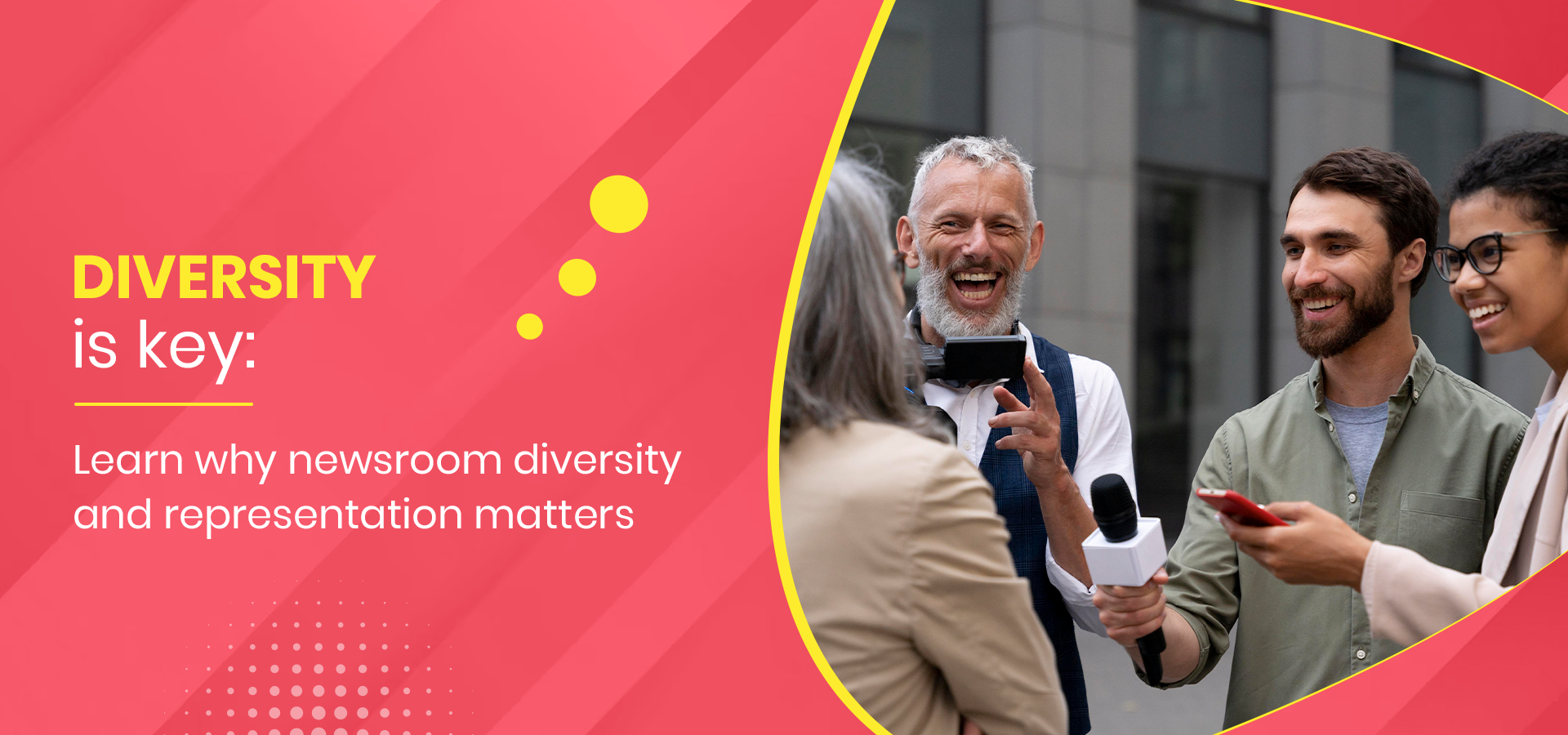
Newsroom diversity represents the imperative to ensure various demographics are included in the decision-making and storytelling processes of media outlets. In today's globalized media landscape, it is integral to fostering balanced narratives and preventing unconscious bias. A diverse newsroom brings a variety of perspectives, experiences, and insights, enriching the breadth and depth of coverage. Moreover, it bolsters media's role as a democratic institution, promoting equity and enhancing audience engagement. By accurately representing and serving diverse audiences, media outlets reflect the multiplicity of society and foster inclusivity.
Moris Media, India's best digital marketing agency, believes that ensuring newsroom diversity thus bolsters the legitimacy, relevance, and impact of journalism in shaping public discourse. This not only cultivates greater public trust, but it also empowers underrepresented groups, making media a more accurate mirror of the society it serves, ultimately enhancing the health of our democracy.
Newsroom diversity has a critical role to play in authentic journalism. You can only understand the global perspective through proper representation of a range of social, ethnic, racial, gender, and other demographics within the media outlets. The terminology is not just restricted to the traditional platforms but also needs to encompass the trending digital media as well. The aim is to create an inclusive environment that allows contributions of journalists from diverse backgrounds. Honoring unique perspectives and experiences will only help in broadening insights.
Understanding newsroom diversity involves recognizing the crucial role it plays in creating balanced narratives and in preventing the propagation of unconscious biases. A newsroom with homogenous staff is more likely to produce one-sided coverage, failing to explore issues from all angles. A diverse newsroom, in contrast, brings multiplicity in viewpoints, leading to more comprehensive and nuanced storytelling.
Newsroom diversity also serves as a reflection of the community or society the media outlet is serving. If people find that their experiences and identities are getting ideal representation, they will be more aligned to trusting and engaging with that media service provider. It furthers the media's democratic role, promoting equal representation and enhancing audience engagement.
In addition, newsroom diversity is a matter of equity and justice. For too long, underrepresented groups have been sidelined in media narratives, reinforcing stereotypes and fuelling discrimination. Inclusion in newsrooms allows for these communities to tell their own stories, challenge stereotypes, and shape public discourse.
Newsroom diversity strengthens journalism by expanding its scope, boosting credibility, fostering public trust, and creating a more accurate depiction of our pluralistic society. Therefore, it is a pivot that ensures the democratization of media.
As we are halfway through 2023, we see a situation wherein the state of newsroom diversity is a subject of ongoing concern and attention. Some media outlets have definitely made progress but significant disparities still exist when it comes to differential demographics between newsroom staff and the public they cater to. Some groups are still grossly underrepresented, with divisions still evident sadly on the basis of colour and socio-economic status.
Male dominance in newsrooms globally is one things that has been and still is a cause of concern. Marginalized groups also find themselves underrepresented in media professions worldwide.
The silver lining is of course there with people waking up to this issue, and intensifying efforts to address it. A lot of organizations are now adopting diversity and inclusion strategies. This is evident in their recruitment, retention, and promotion of journalists from underrepresented backgrounds. Moreover, there's a burgeoning emphasis on fostering an inclusive culture within newsrooms, ensuring all voices are heard and valued.
We should also realise that newsroom diversity extends beyond race and gender and also includes factors like educational background, geographic location, and socioeconomic status. It's clear that achieving true newsroom diversity is a complex task, one that requires ongoing commitment and structural changes within the media industry.
Despite the increased recognition of the importance of newsroom diversity, achieving it is not without challenges. We face multifaceted barriers in the path of inclusivity, with systemic issues and even individual biases standing in the way.
Firstly, there is the challenge of unconscious bias. Hiring managers, often unconsciously, tend to hire individuals who are similar to themselves, a phenomenon known as 'homophily'. This reinforces existing demographics and makes it difficult for underrepresented groups to break into the field.
Secondly, there are structural and systemic issues. The media industry has historically been dominated by individuals from certain racial, socioeconomic, and educational backgrounds. This historical legacy presents a significant barrier to change. Some structural barriers also act as impediments as there is gross disproportion in educational access, internships and entry-level jobs for the underrepresented communities.
Thirdly, there is the challenge of retention and promotion. Companies that are hiring diverse journalists may face challenges inn providing them with mentors or ensure that they work in a supportive environment. The result is that frustration of these new joiners causing higher turnover rates. Leadership positions also lack diversity, which as a trickledown effect continues this cycle of homogeneity.
Lastly, there's the issue of tokenism, where organizations may hire or promote a few individuals from underrepresented groups to give the appearance of diversity without making substantial changes.
These challenges indicate that achieving newsroom diversity requires more than just hiring diverse journalists. It requires a commitment to confronting unconscious bias, addressing systemic barriers, fostering an inclusive culture, and prioritizing equitable promotion and retention policies. Without such comprehensive efforts, barriers to newsroom diversity will persist.
Inclusive newsroom practices are vital in fostering an environment where journalists of all backgrounds feel valued and have equal opportunities to thrive. This is not just necessary ethically that media houses promote diversity and equity. Implementing this becomes a huge contributor to the quality, reach, and relevance of journalism.
Inclusive practices begin with recruitment and hiring. By broadening the scope of talent search beyond traditional networks and implementing unbiased selection processes, newsrooms can attract a diverse pool of candidates. This includes reaching out to educational institutions with diverse student bodies and using neutral job descriptions that don't inadvertently deter certain groups.
However, inclusion extends beyond hiring. Newsrooms must also prioritize a supportive and respectful environment. This means actively addressing microaggressions and biases, providing equal opportunities for growth and promotion, and ensuring that diverse voices are heard and valued in editorial decisions. A culture of respect and equity can reduce turnover rates among underrepresented groups and promote diversity in leadership roles.
Training is another key aspect. Regular workshops and trainings on unconscious bias, cultural competency, and inclusive leadership can help individuals understand the value of diversity and become allies in promoting it.
Inclusive storytelling is also crucial. Ensuring coverage reflects and respects the diversity of the audience not only increases trust and engagement, but also challenges stereotypes and broadens public discourse.
Inclusive newsroom practices, therefore, are an essential part of modern journalism. They enhance the integrity, quality, and impact of journalism, creating a more accurate reflection of our diverse world.
Promoting newsroom diversity requires a multifaceted approach that acknowledges and addresses both the systemic and individual barriers to inclusion. It starts with leadership's commitment to diversity as a priority and the establishment of clear diversity goals and metrics. This can include concrete targets for recruitment, retention, and promotion of journalists from underrepresented backgrounds.
A significant step is revising recruitment strategies. This can involve broadening talent searches to include diverse communities and educational institutions, offering internships and scholarships to individuals from marginalized groups, and implementing inclusive hiring practices that minimize unconscious bias.
Supporting diversity should extend beyond hiring. News organizations need to create inclusive environments where journalists of all backgrounds can thrive. You need to ensure that team members from diverse background get the same level of mentoring and career development opportunities. Microaggressions and biases need to be handled strongly while also ensuring equitable representation in decision-making processes.
Training programs can also play an essential role. These might focus on raising awareness about unconscious bias, promoting inclusive leadership, and educating staff about the importance and benefits of diversity.
Finally, promoting diversity should manifest in the content produced. Diverse perspectives should be included in the news narratives, ensuring accurate and respectful representation of different communities.
In essence, promoting newsroom diversity is an ongoing process that requires intention, effort, and a genuine commitment to change.
Addressing representation in news coverage is an essential aspect of fostering diversity and inclusivity in journalism. It involves ensuring that the people and communities covered in the news reflect the diverse reality of our world.
Firstly, journalists and editors must actively seek out and amplify voices from underrepresented communities. This can involve seeking diverse sources for stories, highlighting issues that disproportionately impact marginalized groups, and allowing these groups to tell their own stories, rather than being spoken for.
Secondly, news coverage must avoid perpetuating stereotypes and biases. This requires conscientious reporting and editing practices that challenge, rather than reinforce, harmful narratives. Training on unconscious bias and cultural competency can equip journalists with the skills to do this.
Thirdly, representation in news coverage also involves showcasing the diversity within individual communities. Rather than presenting any community as monolithic, news coverage should highlight the myriad experiences, perspectives, and voices within these communities.
Finally, it's crucial to solicit feedback from the audiences being represented to ensure their perspectives are being accurately and respectfully portrayed.
A continued commitment to fostering inclusivity, representation, and equity in the media is the need of the hour. As we move forward, we can anticipate an increasing emphasis on creating diverse and inclusive newsrooms as a standard practice, not an afterthought.
With rising awareness and evolving societal norms, the expectation is that media organizations will consistently prioritize diversity in their recruitment, retention, and promotion policies. Technology will play a role in this, with artificial intelligence and machine learning potentially offering ways to mitigate unconscious biases in hiring and reporting.
Moreover, we can expect more transparency and accountability from media organizations. The future may see newsrooms regularly publishing diversity reports, which can apply pressure to maintain progress.
We also expect that there will be further diversification on aspects of socioeconomic background, education, geographical location, disability, and more. This expanded view will better reflect the multidimensional nature of society.
Finally, audience expectations are likely to drive this change. As societies become more diverse, audiences will demand news coverage that accurately reflects and respects their varied experiences. The future of newsroom diversity, therefore, rests on a holistic, systemic approach to inclusivity and representation.
Liked reading this blog? Spread the word!




The Power of Team Calendar: Boosting Efficiency and Collaboration with moCal
Read More
Mastering Business Time Management with moCal's Online Calendar For Business
Read More
Unlocking Seamless Collaboration with moCal's Online Shared Calendar
Read More
Unlocking the Power of 7-in-1 moCal: Redefining Efficiency in Modern Business
Read More
Elevating Personal Branding: The Moris Digital Doctors Prescription
Read More


If you want the Moris Media Team to help you get more traffic, just book a call.




We hate spam as much as you do