











Hope you enjoy reading this blog post.
If you want the Moris Media Team to help you get more traffic, just book a call.
Thursday, 25 June 2026

Written by :
Kaushik Chakraborty
SALES AND MARKETING DIRECTOR
July 31st, 2023
 892
892
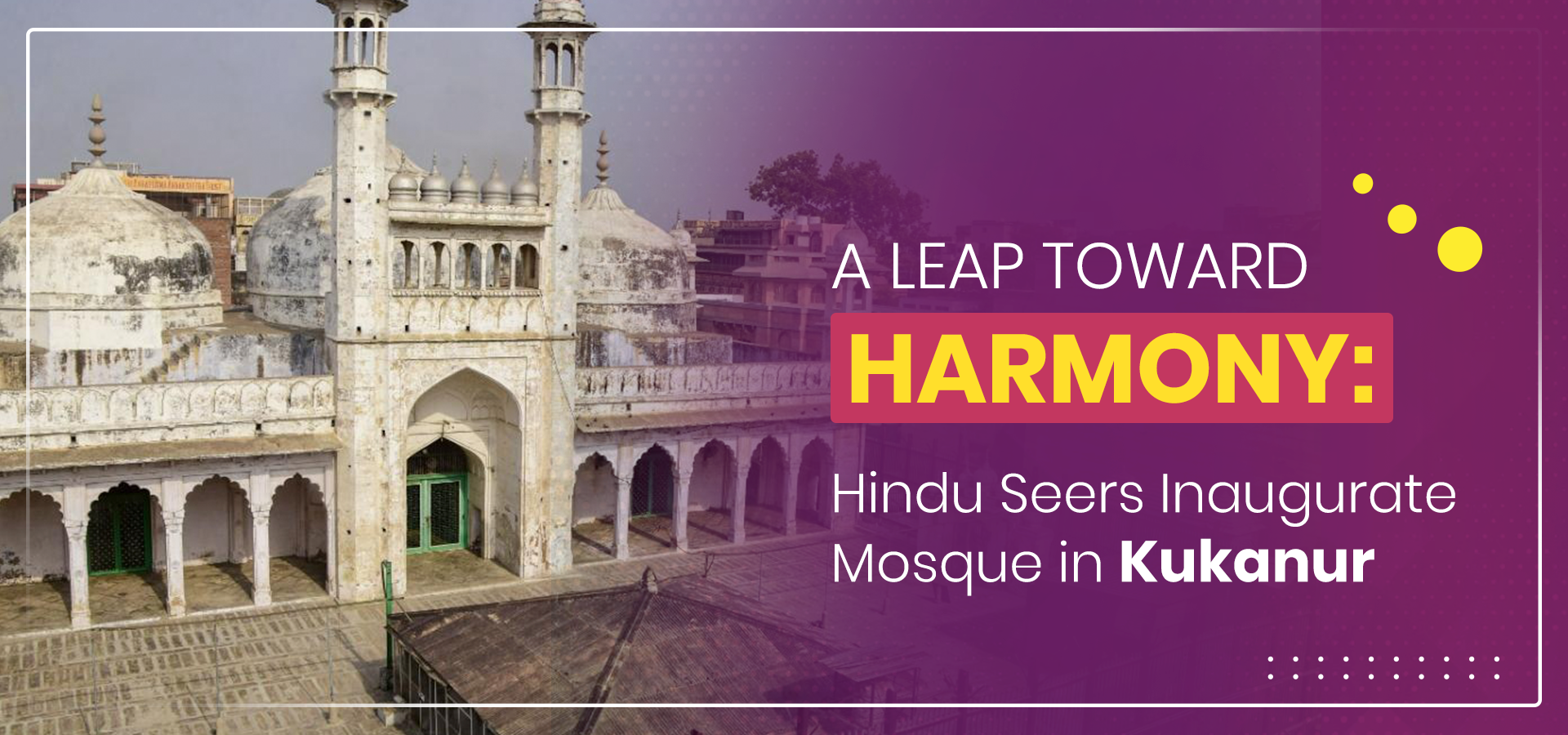
In an era marked by increasing religious polarization, Moris Media proudly showcases a remarkable event in the town of Kukanur, Karnataka, has illuminated the path to religious harmony. Demonstrating the potential for peaceful coexistence, Hindu seer Mahadev Mahaswamiji inaugurated a mosque while Muslims actively participated in temple services. This extraordinary manifestation of interfaith solidarity not only transcends religious divides, but also sets a powerful example of unity in diversity for the rest of the nation and the world. These acts of communal harmony in Kukanur serve as a testament to the deeply ingrained ethos of mutual respect and tolerance that have shaped India's cultural fabric for centuries.
In a poignant display of interfaith camaraderie, the town of Kukanur, Karnataka bore witness to an act of profound unity. Hindu seer Mahadev Mahaswamiji took the stage in an extraordinary event that embodied the spirit of harmonious coexistence: the inauguration of a mosque. Mahaswamiji, an esteemed religious leader, didn't hesitate to transcend the confines of religious segregation, epitomizing a commitment to religious harmony that continues to resonate within the community.
At the heart of this event was the newly built Itagi Mosque, symbolizing not just a place of worship, but a beacon of unity, tolerance, and peace. The remarkable spectacle of a Hindu seer inaugurating a mosque is no ordinary feat. This was not a hasty, impromptu decision, but a deliberate, mindful act intended to send a strong message about mutual respect and understanding. The inauguration was a public declaration that religion, often seen as a force that divides, can also be a potent catalyst for unity.
The act was symbolic, powerful, and communicated a simple yet profound message: that religious harmony is possible and that it is the pathway to a peaceful coexistence. Mahaswamiji’s act serves as a reminder that true faith transcends boundaries and fosters a sense of belonging and community among all people, irrespective of their religious affiliations.
Abhinava Gavisiddeswara Swamiji, another revered Hindu seer, shares a vision of religious harmony and peaceful coexistence that transcends mere symbolism. For him, religion is not about superiority but unity. His beliefs reflect a profound understanding that true spirituality lies not in asserting religious dominance, but in acknowledging and appreciating the shared human experience beneath diverse faiths.
Swamiji's interpretation of what it means to be truly religious is refreshingly humane. For him, genuine religious adherence involves exercising empathy and kindness without any bias. He emphasizes, “A person who donates blood to a patient without bias is a truly religious person.” His words are a clarion call for breaking away from divisive religious attitudes and embracing an ethos of universal compassion.
His views extend beyond philosophical musings. They represent a practical guide to living: “Even a common man can function as a religious person. True religion is to live without hurting and defrauding others.” By placing a premium on human values, Swamiji redefines the concept of religious devotion. He underscores that the essence of all religions is love, compassion, and respect for all, effectively driving home the point that the path to religious harmony begins with embracing these universal values.
Religious harmony holds significant importance in today's increasingly diverse and interconnected world. It's an integral pillar for peace, stability, and progress in societies that are culturally and religiously diverse. The celebration of shared values and mutual respect among various religious groups fosters social cohesion, which is vital for peaceful coexistence.
Religious harmony shuns hate, bigotry, and intolerance, replacing these detrimental tendencies with understanding, empathy, and love. It bridges the artificial divides that separate individuals based on their faith, allowing them to understand that beneath the different rituals, customs, and beliefs, the core values that bind humanity are essentially the same.
In a broader perspective, religious harmony contributes to the global effort for peace. In a world often marred by religious conflicts and disputes, instances of interfaith cooperation and understanding serve as powerful counter-narratives. They stand as testament to the fact that religions can coexist and thrive together, dispelling notions of inherent religious incompatibility.
Furthermore, religious harmony fosters an environment conducive to economic and social development. A society where diverse religious groups live together in peace is likely to be more productive, progressive, and innovative, underscoring the tangible benefits of religious harmony. Thus, in the pursuit of a just, peaceful, and advanced society, promoting religious harmony becomes a necessity, not a choice.
Equally heartening and promising for religious harmony in India is the participation of Muslims in Hindu temple services in the same Karnataka town. This reciprocal act of communal respect and unity mirrors the sentiment of inclusivity and acceptance propagated by the Hindu seers. Muslim community members, by participating in Hindu rituals, embody a spirit of shared religious experiences that transcends the boundaries of individual faiths. These acts of mutual respect, understanding, and participation in each other's religious ceremonies showcase an inspiring model of interfaith harmony and peaceful coexistence. This is a poignant reminder that the essence of all religions is love, peace, and mutual respect, transcending man-made divisions.
Interfaith initiatives like these have a profound impact on society. They act as catalysts in fostering mutual respect, understanding, and peaceful co-existence among individuals of various faiths, thereby strengthening the social fabric. Such actions mitigate the risks of religious conflict and strife, which can often stem from ignorance and lack of understanding about other faiths. By creating a shared space for engagement and interaction, they bridge the gap between different religious communities, fostering dialogue, empathy, and respect.
Moreover, these actions also set a compelling precedent for others to follow. They act as powerful demonstrations that underline the essence of all religions - love, compassion, and harmony. As communities witness these acts of unity, they are encouraged to engage in similar practices, leading to a ripple effect that can potentially transform societal norms and attitudes towards religious diversity.
In a diverse country like India, with its multitude of faiths and cultures, these initiatives contribute significantly to national unity and social cohesion. They facilitate the creation of a more inclusive society that values and celebrates its diversity rather than seeing it as a divisive factor. In essence, they aid in fostering an environment where religious harmony thrives, paving the way for a peaceful and united nation.
Liked reading this blog? Spread the word!




The Power of Team Calendar: Boosting Efficiency and Collaboration with moCal
Read More
Mastering Business Time Management with moCal's Online Calendar For Business
Read More
Unlocking Seamless Collaboration with moCal's Online Shared Calendar
Read More
Unlocking the Power of 7-in-1 moCal: Redefining Efficiency in Modern Business
Read More
Elevating Personal Branding: The Moris Digital Doctors Prescription
Read More


If you want the Moris Media Team to help you get more traffic, just book a call.




We hate spam as much as you do