











Hope you enjoy reading this blog post.
If you want the Moris Media Team to help you get more traffic, just book a call.
Saturday, 27 June 2026

Written by :
Kaushik Chakraborty
SALES AND MARKETING DIRECTOR
August 14th, 2023
 1042
1042
The recent times are witness to some rapidly escalating global crises. This has put the United Nations' Sustainable Development Goals (SDGs) under intense scrutiny. The SDG had been conceived as an ambitious blueprint for a utopian global society. The aim was to carve a world devoid of extreme poverty, replete with gender equality, and resilient against climate change. A 15-year timeframe had been set for achieving all these goals.
Yet, as we pass the halfway mark, the reality contrasts starkly with the intent. With unprecedented deforestation rates, looming threats of global warming, and heightened geopolitical tensions, these goals, though noble, seem to drift further into the realm of idealism. The 2023 UN report starkly underlines this divergence, suggesting the SDGs might be “disappearing in the rear-view mirror.”
Given these pressing challenges, Moris Media, India's best digital marketing agency believes it’s imperative to reassess whether the SDGs, in their current form, can truly guide us to the global future we aspire to.
The journey to the Sustainable Development Goals was laid through the Millennium Development Goals (MDGs). Introduced in early 2000s, the MDGs has an optimistic, clear, and targeted approach towards global challenges. Encompassing eight key objectives, they focused the collective energies of donor nations, philanthropic foundations, and developing countries. The results achieved were really spectacular. Global extreme poverty rates came down significantly, while undernourishment and child mortality were halved. Furthermore, gender disparities in education were largely addressed, and the battle against diseases like HIV and malaria also gained substantial ground.
Buoyed by these successes, the global community sought to "finish the job." The transition from MDGs to SDGs, however, brought about significant changes. Firstly, the formulation process shifted. Unlike the MDGs, which were crafted swiftly by a select group led by the then UN Secretary-General, Kofi Annan, the SDGs were borne out of extensive consultations. Every one of the 193 UN member states, along with countless civil society groups, contributed to drafting these new goals. The result was a broad, inclusive, but considerably vaguer set of 17 objectives with 169 sub-targets. Secondly, the world of 2015, when the SDGs were adopted, differed vastly from 2000, a fact insufficiently reflected in the SDGs' vision.
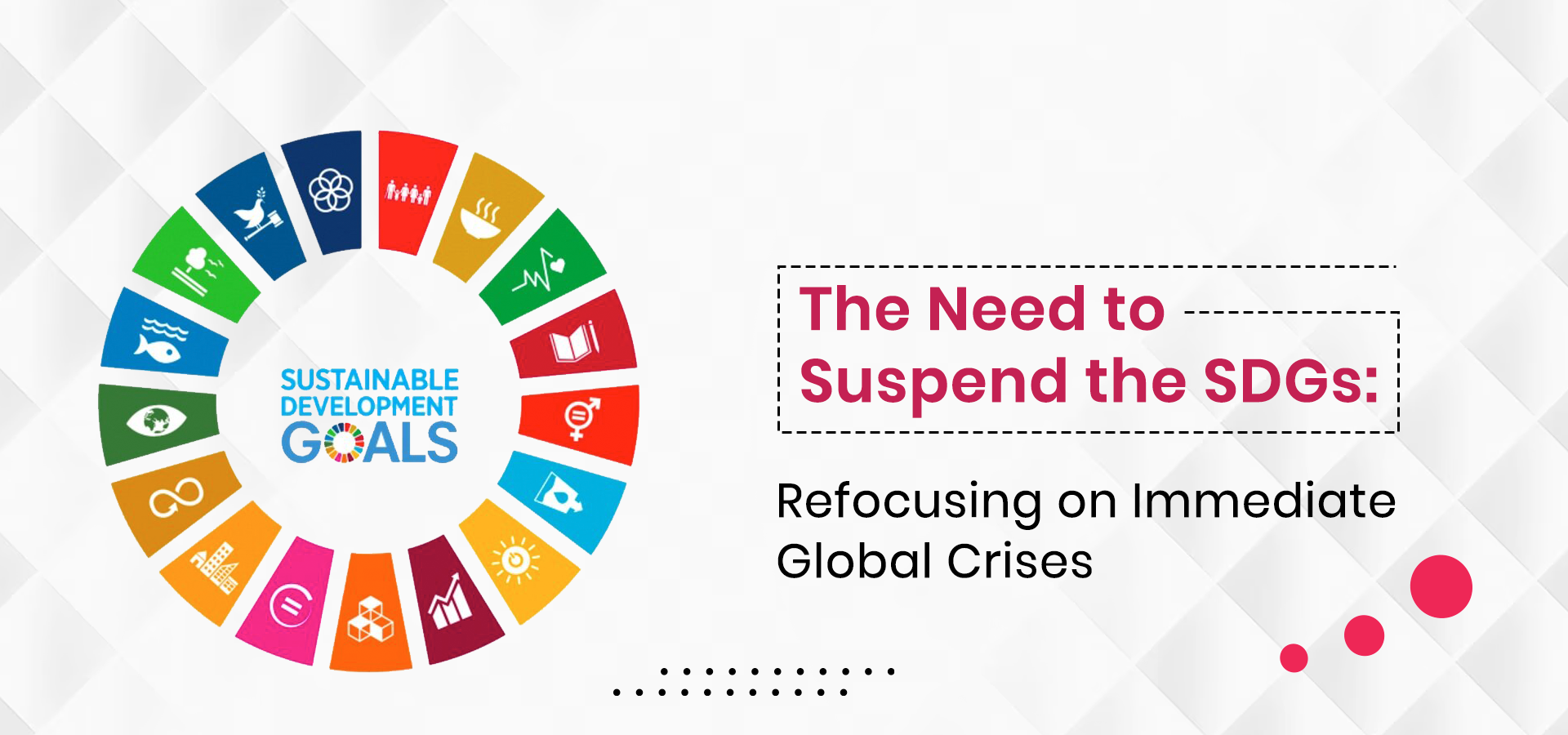
The Sustainable Development Goals, with their expansive set of 17 goals and 169 sub-targets, ambitiously envisioned a utopian global society, one free from poverty, equipped with universal healthcare and education, addressing major environmental concerns, and resolving conflicts through collaboration. Yet, as we moved past the midpoint of the targeted 15-year timeframe, it became glaringly evident that this blueprint was out of sync with prevailing global realities.
Deforestation rates soared, climate change transitioned from a distant concern to an immediate threat, and geopolitical tensions escalated. These mounting challenges made the SDGs appear increasingly idealistic and even disconnected. The UN's 2023 report starkly articulated this discrepancy, noting that the SDGs were rapidly fading in relevance, dimming hopes for countless generations.
Despite their roots in the significant achievements of the MDGs, the SDGs faltered. A comprehensive 2023 UN assessment revealed a mere 12% of the targets were on course. Alarmingly, around 30% hadn’t progressed at all or had even backslid from their 2015 positions. The world witnessed a regression in hunger levels reminiscent of 2005, starkly contrasting with the promise of eliminating hunger altogether. The aspirations of the SDGs were being constantly challenged by the pressing urgencies of the real world.
The journey from conception to realization of the SDGs was notably distinct from its predecessor, the MDGs. While the MDGs were conceived swiftly by a tight-knit group around then UN Secretary-General Kofi Annan, ensuring specificity in scope, the SDGs underwent an expansive and inclusive process. This laborious drafting exercise encompassed all 193 UN member states and myriad civil society groups, spanning several years.
However, a universal truth in negotiations prevailed: the broader the consensus, the greater the ambiguity. Consequently, the SDGs ended up housing broad generalities such as "End poverty in all its forms everywhere". The 17 goals, paired with an overwhelming 169 sub-targets, not only made implementation challenging but also diluted the focused impact that its predecessor, the MDGs, had achieved.
Furthermore, while the MDGs had the advantage of riding the wave of a booming global economy, the SDGs seemed out of touch with the tumultuous period between 2000 and 2015. They overlooked significant global shifts, resulting in a vision that, while commendable, was somewhat misaligned with ground realities. The noble intent behind the SDGs was evident, but the complexities of its conception and the broadness of its objectives led to unintended shortcomings in its execution.
As the UN's 2023 assessment unveils, the SDGs, despite their grand vision, are showing signs of faltering in the race against time. With a comprehensive review of roughly 140 out of the 169 targets, the data paints a grim picture: a meagre 12% of the targets are on track to be realized by 2030. The remaining goals display varied levels of progress; nearly half are lagging significantly or even regressing from the baseline set in 2015.
Hunger, a pivotal issue the SDGs aimed to combat, has rebounded to alarming levels reminiscent of 2005. Furthermore, targets such as halving national poverty levels or closing gender disparities in legal protections are moving at a snail's pace. At current rates, some goals might take centuries to achieve.
While the MDGs showcased a notable reduction in global challenges, from drastic decreases in extreme poverty to commendable control over diseases, the SDGs appear to be struggling to replicate such success. The world, in its endeavour to meet these lofty goals, is confronted with the stark reality of insufficient progress and the monumental challenge that lies ahead.
Amidst the intense focus on the SDGs, some immediate, existential threats to humanity have been inadvertently overshadowed, pushing the world further from a sustainable future. Four interconnected crises loom large, threatening to disrupt the very fabric of society and the environment.
Firstly, climate change is not an issue that will have futuristic implications; it is already affecting us presently. We are already witnessing increasing global temperatures and erratic weather patterns. This highlights that the Earth has almost reached a tipping point. The rapid biodiversity loss also highlights the degrading health of our ecosystems. The loss of species and habitats is not just an environmental concern but is linked to our survival as human beings.
Food security, intertwined with the previous two crises, emerges as the third significant challenge. With climate change affecting agricultural yield and biodiversity loss impacting food chains, global food supplies are under threat. Lastly, the Bretton Woods financial system and the multilateral decision-making mechanism, intended to address such global crises, are themselves in a state of dysfunction, further hindering cohesive action.
These urgent issues necessitate immediate attention and action, beyond the umbrella of the SDGs, to ensure a sustainable and secure future.
As the world anticipates the UN General Assembly’s Special Session on Sustainable Development Goals this September, the stakes have never been higher. There's a palpable tension in the air, reflecting the contrasting visions for the SDGs' future trajectory.
On one hand, voices like that of António Guterres, the UN Secretary-General, resonate with a belief in persistence. They argue that doubling down on efforts, perhaps extending the SDGs' timeline by another decade or so, might bring them closer to realization. The implicit idea here is that the world needs more time to align its goals and aspirations.
However, this perspective runs the risk of perpetuating inertia. A mere postponement might ease immediate pressures but could also result in diminishing the SDGs’ sense of urgency, leading to broader disillusionment. Critics argue that pushing the deadlines might mask the inherent flaws and discrepancies in the goals themselves.
The alternative vision advocates for a strategic pause. By temporarily suspending the SDGs, the focus could be redirected towards emergency plans in place for pressing crises like climate change and biodiversity loss. Such a move would be bold, signalling a prioritization of immediate existential threats over long-term objectives.
This upcoming session, therefore, isn't just another meeting – it's a pivotal moment that will shape the global agenda for the forthcoming decade.
SDGs getting suspended is not a trivial issue. Let’s not restrict ourselves into looking at immediate consequences. This decision will have profound implications for the global community and the UN's approach to holistic development.
Firstly, it sends a compelling message about priorities. The suspension signifies an acknowledgment of the existing dissonance between the SDGs and ground realities. By redirecting attention towards more imminent crises, the UN would be signalling a flexible, responsive approach rather than a rigid adherence to previously set goals.
Additionally, a suspension might inadvertently provide a moral boost. It could be seen as a clarion call to rally global efforts in addressing immediate existential threats. By focusing on the Paris Agreement for climate and the Kunming-Montreal Global Biodiversity Framework, for instance, it emphasizes a clear direction for collective action.
Financially, diverting the vast resources spent on SDG planning, measuring, and reporting could accelerate efforts in other crucial areas. However, critics may argue that this approach may sideline other essential fights, like combatting diseases or advancing gender equality.
While the broader benefits of a temporary halt seem evident, it's crucial to ensure that the momentum gained over the years doesn't dissipate, leaving global development in a void.
Liked reading this blog? Spread the word!




The Power of Team Calendar: Boosting Efficiency and Collaboration with moCal
Read More
Mastering Business Time Management with moCal's Online Calendar For Business
Read More
Unlocking Seamless Collaboration with moCal's Online Shared Calendar
Read More
Unlocking the Power of 7-in-1 moCal: Redefining Efficiency in Modern Business
Read More
Elevating Personal Branding: The Moris Digital Doctors Prescription
Read More


If you want the Moris Media Team to help you get more traffic, just book a call.




We hate spam as much as you do