











Hope you enjoy reading this blog post.
If you want the Moris Media Team to help you get more traffic, just book a call.
Wednesday, 24 June 2026

Written by :
Mehak Veru
PR & Business Executive
July 11th, 2023
 1097
1097
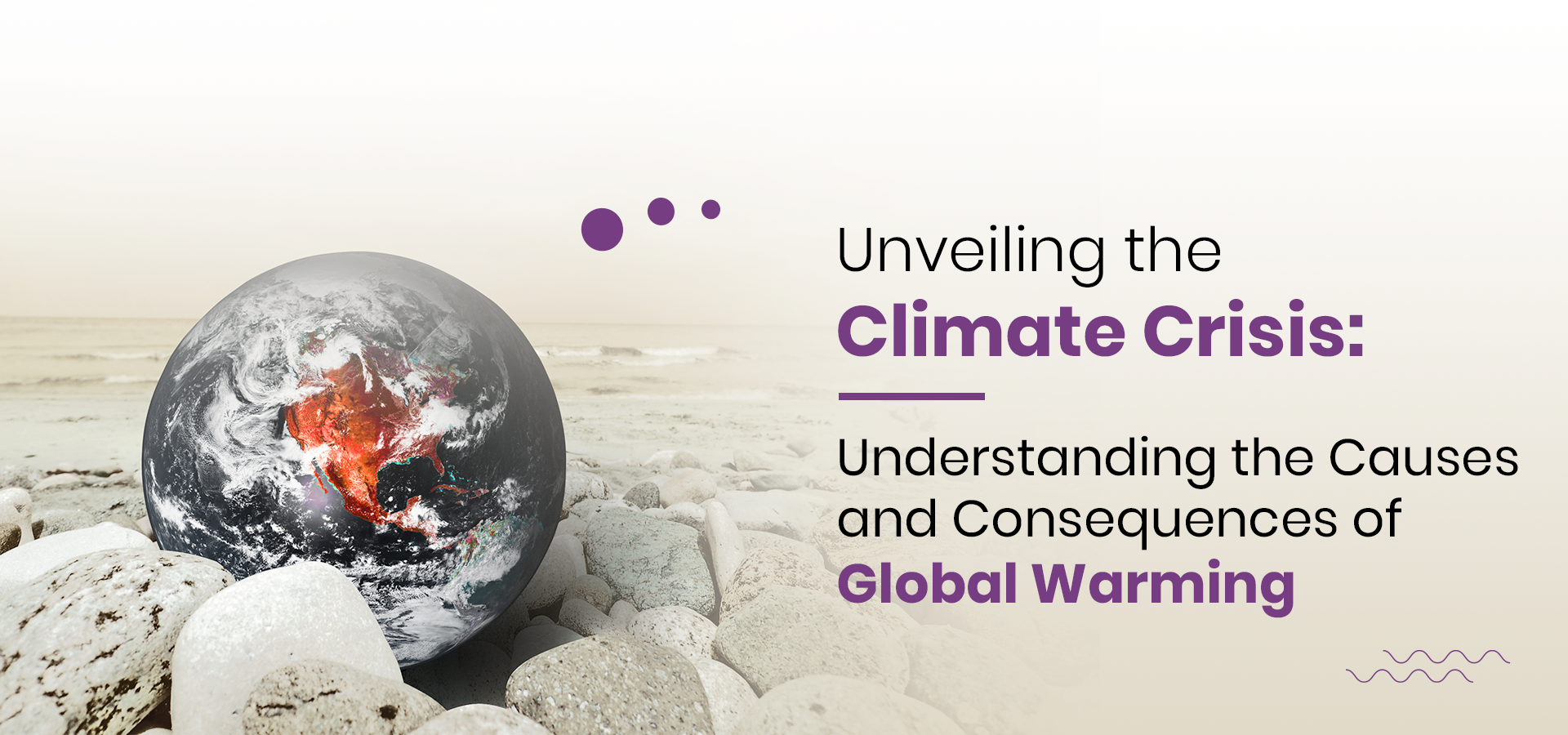
This trend has been noticed during the past century or so. This change has affected the pattern of the earth's climate. The magnitude and significance of rising surface temperatures, the impacts of past and future warming on human existence, and the necessity of taking action to prevent future warming and deal with its repercussions are all topics of intense discussion. It refers to the gradually increasing average surface temperatures of the Earth, which are mostly due to human activities. The leading digital marketing company in India, Moris Media, will provide a full overview of the causes of global warming and examine the negative consequences it has on the environment, ecosystems, and humans in general.
Global warming is considerably exacerbated by the destruction of trees. Through photosynthesis, trees are essential for absorbing CO2 from the atmosphere. The primary source of oxygen is plants. They maintain environmental equilibrium by absorbing carbon dioxide and exhaling oxygen. For a variety of home and commercial uses, forests are being destroyed. This natural carbon sink is disrupted by deforestation, which releases stored CO2 and reduces the planet's ability to absorb greenhouse gases.
For most of human history, our ancestors relied on very basic energy sources like human muscle, animal muscle, and the burning of biomass like wood or crops. Due to its GHG impact, carbon dioxide generated during the burning of fossil fuels for the creation of heat and electricity is a significant source of the global CO2 emissions believed to be responsible for global warming. However, it is anticipated that fossil fuels like coal will continue to be utilized for a few more decades. Ammonia is a molecule that belongs to the nitrogen family that is also released into the atmosphere, primarily through agricultural activities but also through the combustion of fossil fuels.
Industrial processes such as manufacturing and chemical manufacture emit GHGs including nitrous oxide and methane. The onset of industrialization has resulted in a dramatic rise in the earth's temperature. The earth's temperature is rising as a result of the manufacturers' damaging emissions. A large amount of methane emissions are also produced by agricultural practices including rice growing and animal rearing. Through direct GHG emissions and indirect effects on land use and deforestation, these industries contribute to global warming.
Earth's subsurface is home to frozen soil that has spent a considerable amount of time trapped in atmospheric gases. In glaciers, it could be found. Large sheets of ice and snow known as glaciers are found on land all year round. Every continent, except Australia, has them in its mountains. Freshwater resources decrease due to glacier retreat, reducing the amount of water available to populations that depend on snowmelt. Coastal areas are at risk from rising sea levels because they will experience increasing coastal erosion, floods, and community displacement.
Extreme weather events including hurricanes, droughts, floods, and wildfires are just a few that are exacerbated by global warming. Warmer ocean temperatures provide hurricanes more energy, increasing their destructive power. relies on the full collection of factors that make up the climate. Depending on the level of flooding and how long the water remains, flooding that follows a storm may affect an ecosystem. Soils that have been flooded may become saturated or flooded. Because plant roots need oxygen to survive, overly-saturated soils can cause plant death by drowning the roots. They have an impact on agriculture, water availability, and ecosystems. Floods are more frequent during wet events, which harms ecosystems and infrastructure.
Ecosystems undergo gradual transformation. Volcanic eruptions, floods, or fires are examples of sudden disturbances that can have an impact on which species flourish where. Human activities also lead to other disturbances. Some disruptions can be disastrous for a single species and potentially result in the irreversible extinction of an entire species, which is referred to as extinction. The diversity of species in the biosphere declines when species become extinct, which reduces biodiversity, or the variety of life. Each organism contributes significantly to the environment to which it belongs. Other species in the food chain are impacted if one species disappears.
Ocean acidification results from increased ocean absorption of CO2 emissions. This may change the marine food webs and the human food supply. In addition, acidification may reduce prospects for tourism, storm protection provided by reefs, and other difficult-to-value advantages. Acidic seas have a detrimental effect on marine life, especially on creatures that need calcium carbonate to construct their shells and skeletons. Since coral reefs are so important for marine biodiversity, ocean acidification puts entire marine ecosystems in jeopardy.
Liked reading this blog? Spread the word!




The Power of Team Calendar: Boosting Efficiency and Collaboration with moCal
Read More
Mastering Business Time Management with moCal's Online Calendar For Business
Read More
Unlocking Seamless Collaboration with moCal's Online Shared Calendar
Read More
Unlocking the Power of 7-in-1 moCal: Redefining Efficiency in Modern Business
Read More
Elevating Personal Branding: The Moris Digital Doctors Prescription
Read More


If you want the Moris Media Team to help you get more traffic, just book a call.




We hate spam as much as you do