











Hope you enjoy reading this blog post.
If you want the Moris Media Team to help you get more traffic, just book a call.
Wednesday, 24 June 2026

Written by :
Mehak Veru
PR & Business Executive
July 10th, 2023
 1050
1050
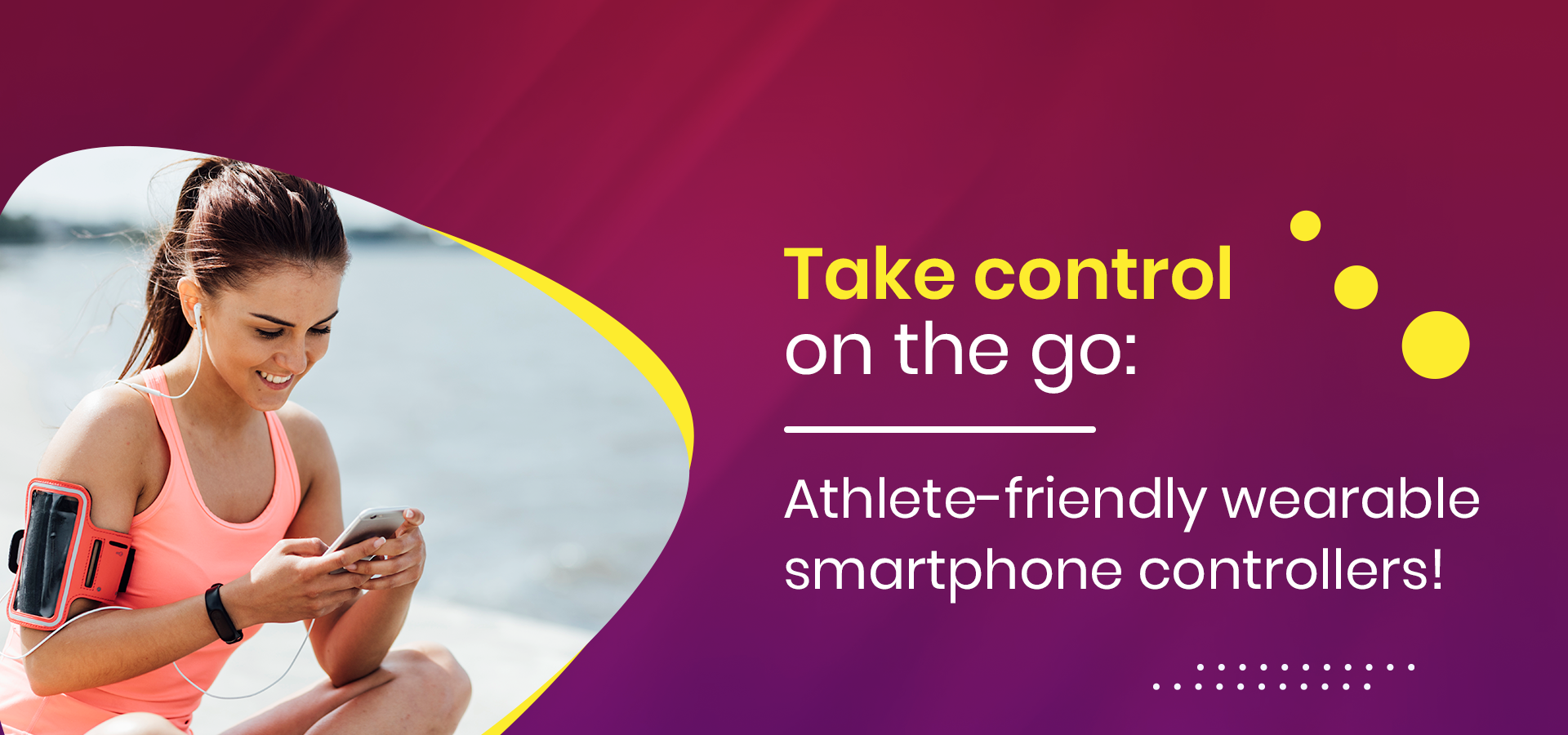
Athletes rely on technology to improve their performance and connect with their supporters in the fast-paced world of sports. Smartphones are becoming a necessary tool for athletes since they provide them access to social media, training programs, and real-time data. By overcoming the limits of existing technology, wearable sensors will make it possible to accurately and painlessly collect a user's vital signs straight from the body. Wearable sensors enable players to track performance and bodily movements objectively during sporting activities, extending beyond the coach's subjective evaluation parameters. However, it might be difficult and distracting to use a smartphone during demanding practice sessions or tournaments. Moris Media, Indias Leading Digitial Marketing Agency realises how Wearable smartphone controllers for athletes provide a smooth, hands-free approach to regulating access in situations.
Innovative gadgets called wearable athlete smartphone controllers are made to make it easier for athletes to use their smartphones. These controllers are often strapped to the athlete's arm or waist or worn on the wrist like a wristwatch on other body regions. In both the sports and medical fields, real-time monitoring of human physiological processes and performance is becoming more and more common. Athletes can engage with their cell phones without having to physically hold them because of the sensors and cutting-edge networking possibilities that are built into them.
The ability of wearable athlete smartphone controllers to expedite media access is one of its main advantages. The urge to quantify one's aptitude in a field in which they wish to learn more (tracking) might be a factor in why data is measured. Deeper measurement is now possible because of sensor advancements. With a few simple gestures or voice phrases, athletes may manage a variety of media features, including music playback, video recording, and even live streaming. Athletes may concentrate on their practice or competition without interruptions or distractions thanks to its hands-free operation. Users have a better understanding of who they are, allowing them to modify their lifestyle at will. Applying sensors to machinery is another way to show the development of sensor technology. With a few simple gestures or voice phrases, athletes may manage a variety of media features, including music playback, video recording, and even live streaming. Athletes may concentrate on their practice or competition without interruptions or distractions thanks to its hands-free operation.
Additionally, smartphone controllers for wearable athletes frequently connect with well-known sports monitoring and performance analysis applications. Without having to touch their devices, athletes can keep tabs on important statistics, evaluate their training progress, and even get coaching advice in real-time. Athletes can stay connected and make data-driven decisions thanks to this seamless connectivity, which improves their overall performance. Consumer wearables have a large market share that belongs to fitness. Due to people's desire to maintain optimal fitness levels for health, sport, and aesthetic reasons, this industry is where wearables are flourishing. Fitbit is a well-known wearable that may be worn on the wrist and is used to track physical activity and sleep patterns. This wearable gadget may be seen as a lifestyle tool where the user's priorities may indicate that they consider fitness as a way of life rather than an activity. Wearable smartphone controllers for athletes offer convenience and use outside of training sessions. During press conferences, interviews, or public appearances, athletes can use these gadgets.
Smartphone controls for wearable athletes are expected to get much more advanced as technology develops. Biometric sensors may be used in later versions to continuously track an athlete's performance data and overall health. This has made it possible for fitness monitoring devices to only use these sensors. The third phase is the future phase; these are designed for wearables, which leverage technological advancements to better use sensors, leading to advancements in flexibility, mobility, and smart fabrics. Athletes might receive immersive training experiences from these devices or have real-time performance data superimposed on their field of vision thanks to augmented reality (AR) capabilities.
Finally, wearable smartphone controllers for athletes provide a useful way for them to access and manage media features without having to physically interact with their handsets. Smartwatches and fitness trackers are examples of popular consumer gadgets that make use of wearable technology. However, because of recent developments in the Internet of things (IoT) and artificial intelligence (AI), wearable technology is now being used in a wide range of contexts. In addition to facilitating communication and fan involvement, the hands-free operation improves attention and concentration throughout practice and competition. Movement and biophysical characteristics may be continuously and unobtrusively monitored using mobile health technologies and activity tracking using wearable sensors. These tools will probably keep developing as technology progresses, giving sportsmen even more power in their quest for perfection.
Liked reading this blog? Spread the word!



The Power of Team Calendar: Boosting Efficiency and Collaboration with moCal
Read More
Mastering Business Time Management with moCal's Online Calendar For Business
Read More
Unlocking Seamless Collaboration with moCal's Online Shared Calendar
Read More
Unlocking the Power of 7-in-1 moCal: Redefining Efficiency in Modern Business
Read More
Elevating Personal Branding: The Moris Digital Doctors Prescription
Read More


If you want the Moris Media Team to help you get more traffic, just book a call.




We hate spam as much as you do